
 English EN
 中国 CN
中国 CN
 French FR
 German DE
 Portuguese PT
 Spanish ES
 Russian RU
 Japanese JA
 Korean KO
 Arabic AR
 Turkish TR
 Italian IT
Essential Steps for Designing and Fabricating Sulfuric Acid Cooler Heat Exchangers
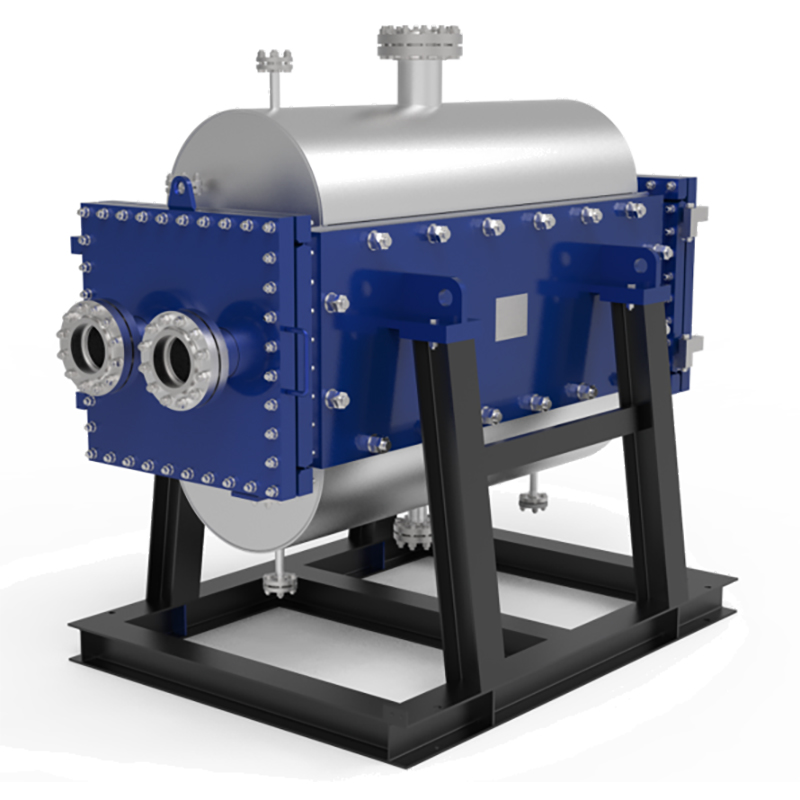
This blog presents essential steps for the design and fabrication of a sulfuric acid cooler heat exchanger. Safety, efficiency, and durability matter at every stage. Recent innovations include anodically protected coolers and two-step cooling systems that use high-alloy plate heat exchangers for better corrosion resistance and performance. Shanghai Heat Transfer’s TP Welded Plate Heat Exchanger stands out for its advanced design and ability to handle harsh industrial environments. Following proper steps in design helps minimize risks and ensures reliable operation.
Project Requirements for Sulfuric Acid Cooler Heat Exchanger
Operational Data Collection
Defining project requirements starts with gathering accurate operational data. This step helps engineers understand the process and set clear design specifications. Teams collect information from equipment drawings, operations logs, and standard operating procedures. Maintenance and reliability teams share insights about past failures and solutions. Engineers use computational fluid dynamics to model fluid flow and thermal behavior. Finite element analysis checks the structure for weak points. Accurate pressure drop modeling ensures the system meets process requirements and maintains optimal performance.
Operational Data Type | Importance |
|---|---|
General arrangement and equipment drawings | Understands layout and design constraints. |
Operations data logs | Shows historical performance and trends. |
Standard operating procedures | Explains operational context and expected performance. |
Insights from maintenance and reliability teams | Shares failure patterns and solutions. |
Computational Fluid Dynamics (CFD) | Models fluid flow and thermal behavior. |
Finite Element Analysis | Checks structural integrity. |
Accurate pressure drop modeling | Ensures optimal performance and throughput. |
Performance Objectives
Setting clear performance objectives is key for a sulfuric acid cooler heat exchanger. These objectives guide the design specifications and help measure success. The main goals include energy efficiency, strong heat transfer, safety, and steady temperature control. Sensors monitor leaks and manage corrosive liquids to keep the process safe. The system must transfer heat efficiently in both hot and cold water loops. Good temperature control keeps the process stable and improves operational performance.
Performance Objective | Description |
|---|---|
Energy Efficiency | Uses materials that work well under inert conditions. |
Heat Transfer Capabilities | Transfers about 4 kW in hot water and 3 kW in cold water. |
Safety Features | Sensors detect leaks and manage corrosive liquids. |
Temperature Control | Maintains steady heat transfer and reduces temperature swings. |
Site and Regulatory Factors
Site and regulatory factors shape the design specifications and process requirements. Local regulations set safety and environmental standards. The site layout affects equipment size and placement. Engineers must check for space limits, access for maintenance, and connections to other process systems. Meeting all specifications ensures safe and legal operation. Choosing a reliable solution like the TP Welded Plate Heat Exchanger from Shanghai Heat Transfer helps meet strict performance and safety standards in challenging environments.
Selecting Heat Exchanger Type and Materials
Comparing Designs for Sulfuric Acid Cooling
Choosing the right heat exchanger design is important for safety and performance. Engineers look at several factors when selecting a sulfuric acid cooler heat exchanger:
High heat transfer efficiency is needed for energy savings.
Corrosion resistance protects equipment from damage.
Long service life reduces downtime and costs.
Welded seals help prevent leaks in harsh chemical environments.
The size and weight of the unit must fit the site.
The table below compares common heat exchanger types used in sulfuric acid cooling:
Heat Exchanger Type | Applications | Advantages | Disadvantages |
|---|---|---|---|
Shell and Tube | Chemical plants, oil refineries | Handles high pressure and temperature | Bulky, needs more space |
Plate | Compact systems | Small size, lower cost | Limited to lower pressure |
Welded Plate | Aggressive fluids like sulfuric acid | Durable, resists corrosion | More complex cleaning |
Shanghai Heat Transfer’s TP Welded Plate Heat Exchanger stands out for its durability and compact design. It is a strong choice for demanding chemical processes.
Material Selection for Corrosion Resistance
Sulfuric acid is highly corrosive. The right material ensures the heat exchanger lasts longer and works safely. Engineers choose materials based on acid concentration and temperature. The table below shows common materials and their properties:
Material | Corrosion Resistance | Temperature Limit | Notes |
|---|---|---|---|
SiC Ceramic | 100% | All concentrations | Chemically inert, no corrosion, high thermal efficiency |
Impervite® Graphite | Up to 75% | 345°F | Good for most uses, can handle up to 90% acid in special cases |
PPS-GR | Up to 60% | 290°F | Mixes graphite and polymer, cost-effective |
09CrCuSb (ND steel) | Excellent | N/A | Forms protective layer, ideal for heat exchangers |
Stainless steel, titanium, and Hastelloy are also popular choices for their resistance to corrosion and high temperatures.
Considering TP Welded Plate Technology
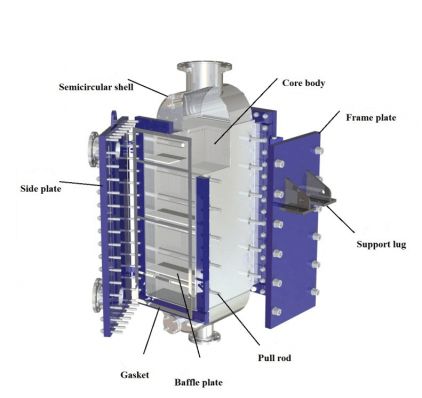
The TP Welded Plate Heat Exchanger offers several advantages for sulfuric acid cooling. Its unique plate dimple design increases heat transfer efficiency. Fully welded plates stop cross-contamination between fluids. Large plate clearances make inspection and cleaning easier. The compact frame saves space and fits in tight areas. Heavy-duty construction gives a long service life. Smooth gas flow paths keep pressure drops low.
Advantage | Description |
|---|---|
Heat Transfer Efficiency | Plate dimples boost heat transfer. |
Prevention of Cross-Contamination | Seam-welded plates block leaks. |
Ease of Inspection and Cleaning | Wide clearances allow easy access. |
Compact Design | Needs less space than traditional models. |
Long Service Life | Strong frame lasts longer. |
Low Pressure Drop | Smooth flow reduces resistance. |
To validate the design, engineers should match the heat exchanger type and material to the process needs. The TP Welded Plate Heat Exchanger from Shanghai Heat Transfer is a reliable solution for challenging sulfuric acid applications.
Key Steps in Heat Exchanger Fabrication
The process of heat exchanger fabrication involves several important steps. Each stage requires attention to detail and strict quality control. These steps ensure that the sulfuric acid cooler heat exchanger will perform safely and efficiently in demanding environments.
Cutting and Forming Components
Fabrication begins with cutting and forming the main components. Engineers use advanced machines like CNC milling and plasma cutters. These tools help achieve precise shapes and tight tolerances. Precision is important because even small errors can affect the final product’s performance. Visual checks and dimensional assessments are performed to confirm that each part matches the design specifications.
During this stage, workers also prepare the plates and shells. They shape the metal to fit the design. High-quality materials such as stainless steel, titanium, and Hastelloy are often used. These materials resist corrosion and handle high temperatures. Non-destructive testing methods, such as ultrasonic testing, help identify any flaws before assembly. This ensures that only defect-free parts move to the next step.
Welding and Assembly
Welding and assembly are critical steps in heat exchanger fabrication. Skilled technicians use methods like TIG and MIG welding to join the components. High-quality welding is essential for structural integrity and leak prevention. The weld seams must be smooth and strong to handle the pressure and temperature of sulfuric acid cooling.
Quality control measures are applied throughout this stage. Technicians use radiographic testing (RT) to inspect weld seams for internal defects. Ultrasonic testing (UT) checks for subsurface flaws and measures thickness. Magnetic particle testing (MT) and liquid penetrant testing (PT) reveal surface defects. These tests help ensure that the assembly meets industry standards such as ISO 9001:2015 and AWS D1.1.
Shanghai Heat Transfer’s TP Welded Plate Heat Exchanger uses advanced welding techniques. This ensures durability and long service life, even in harsh chemical environments.
Bundle and Plate Arrangement
The arrangement of bundles and plates is a key part of the fabrication process. Engineers assemble the plates in a specific order to create the flow channels. The design of the plate pattern affects heat transfer efficiency and pressure drop. Proper alignment is necessary for optimal performance.
Quality checks continue during this stage. Workers perform component dimensional checks and material verification. They inspect welds and joints for accuracy. Surface finish and workmanship are also reviewed. Pressure and leak testing confirm that the assembled unit can handle the required operating conditions.
A well-designed bundle and plate arrangement helps the sulfuric acid cooler heat exchanger achieve its performance goals. The TP Welded Plate Heat Exchanger from Shanghai Heat Transfer features a compact design and easy access for cleaning. This makes maintenance simple and supports long-term reliability.
Tip: Consistent quality control at every stage of fabrication reduces the risk of defects and extends the life of the heat exchanger.
Surface Treatment and Corrosion Protection
Protective Coatings
Protective coatings play a key role in defending heat exchangers against sulfuric acid corrosion. Many industrial plants use advanced coatings to extend equipment life and maintain performance. For example, HeatX surface treatment has shown strong results in reducing corrosion damage, especially in power plant preheater tubes. This treatment stands up to high temperatures and helps prevent acid attack. It also improves heat transfer and keeps the equipment running longer.
Other coatings, such as PTFE and Heresite, are popular choices for sulfuric acid cooler heat exchangers. The table below shows how these coatings perform:
Coating Type | Corrosion Resistance | Heat Transfer Performance |
|---|---|---|
PTFE | Excellent | Improves over time |
Heresite also offers strong protection in harsh environments, including marine settings. It passes tough tests and proves reliable for heat exchangers.
Shanghai Heat Transfer’s TP Welded Plate Heat Exchanger can be paired with these advanced coatings. This combination provides extra durability and efficiency in challenging chemical processes.
Surface Preparation
Proper surface preparation is essential before applying any protective coating. Workers must remove all visible dirt and flash rust from the metal surfaces. This often involves using an alkaline cleaner with flash corrosion protection. Sometimes, a rust removal step is needed, followed by cleaning and neutralization. Clean surfaces help corrosion inhibitors work as intended.
Effective surface preparation ensures that protective coatings bond well and deliver long-lasting results.
Inspection of Treated Surfaces
Inspection confirms that surface treatments are working as expected. Technicians use several methods to check the quality of coatings and detect early signs of corrosion. Magnetic induction and eddy current techniques measure coating thickness without damaging the surface. Salt spray and cyclic corrosion tests simulate harsh conditions to see how well the coating holds up over time.
Visual inspection finds leaks, corrosion, or scaling.
Ultrasonic thickness measurement checks for hidden corrosion.
Dye penetrant and radiographic tests reveal cracks or weld defects.
Regular inspection and maintenance help keep sulfuric acid cooler heat exchangers safe and efficient. Choosing a reliable solution like the TP Welded Plate Heat Exchanger from Shanghai Heat Transfer, combined with proper surface treatment, ensures long-term performance in corrosive environments.
Testing and Quality Assurance Steps
Hydrostatic and Pressure Testing
Hydrostatic and pressure testing are essential for confirming the safety and reliability of sulfuric acid cooler heat exchangers. During hydrostatic testing, technicians fill the unit with water and increase the pressure above normal operating levels. This process helps find leaks, weak spots, or faulty welds. The test ensures the heat exchanger can handle high pressure without failure. Pressure testing also checks for any sudden pressure drops, which may signal leaks or structural problems. Engineers monitor the pressure closely and record any changes. If the pressure drops, they inspect the unit for leaks or cracks. This step is important for both new installations and after repairs. Shanghai Heat Transfer’s TP Welded Plate Heat Exchanger undergoes rigorous testing to guarantee performance under extreme pressure and temperature. Reliable pressure testing helps prevent accidents and extends equipment life.
Non-Destructive Examination
Non-destructive examination methods help maintain quality without damaging the heat exchanger. These methods include:
Eddy Current Testing (ECT) uses electromagnetic induction to find flaws in tubing. It is efficient for spotting weak tubes before they fail.
Visual Testing (VT) involves direct observation with tools like magnifying glasses or borescopes to detect surface defects.
Thermographic Testing (TT) uses infrared imaging to spot thermal changes that may show cracks or voids.
These techniques help identify problems early, reduce downtime, and ensure the unit can handle pressure drops and high pressure safely. Non-destructive examination is a key part of quality assurance for every sulfuric acid cooler heat exchanger.
Documentation and Certification
Proper documentation and certification are required for every project. These records show that the heat exchanger meets industry standards and passes all quality assurance tests. The table below lists common requirements:
Requirement Type | Description |
|---|---|
Compliance Standard | ASME Section VIII, Division 1 |
Quality Assurance Tests | Spot Radiography, Joint Efficiency Testing, Helium Leak Testing, Hydrostatic Pressure Testing, Ultrasonic Testing, Radiographic Testing, Impact Testing, Post Weld Heat Treatment, Hydro Expansion |
Purpose of Testing | Ensure safety, reliability, performance, and durability under thermal cycling, chemical exposure, and high-pressure operation |
Tip: Always keep detailed records of pressure testing and quality assurance steps. This helps with future inspections and supports safe operation.
Shanghai Heat Transfer provides full documentation and certification for the TP Welded Plate Heat Exchanger. This gives customers confidence in the product’s safety and durability.
Supply Chain and Delivery Management
Supplier Coordination
Coordinating with suppliers is a critical part of any sulfuric acid cooler heat exchanger project. Each supplier must understand the unique requirements of sulfuric acid cooling. The following table highlights the main factors that guide supplier selection and coordination:
Key Factor | Description |
|---|---|
Material Selection | Must match acid concentration, temperature, and impurities to prevent failure. |
Thermal Performance Metrics | Cooling efficiency depends on precise engineering for process conditions. |
Acid Concentration & Chemical Compatibility | Systems must handle up to 98% H₂SO₄; dilute acids require re-evaluation. |
Design and Configuration | Different layouts fit various space and maintenance needs. |
Installation Guidelines | Proper installation ensures safety and long service life. |
Operational Procedures | Following protocols keeps operation safe and efficient. |
Maintenance Best Practices | Regular maintenance reduces risks and extends service life. |
Good supplier coordination helps avoid delays and ensures that all materials and components meet strict quality standards.
Packaging and Transport
Packaging and transport protect the heat exchanger from damage during shipping. Workers use custom crates and shock-absorbing materials to secure each unit. Labels show handling instructions and destination details. Teams check for moisture and corrosion before sealing the package. Careful planning prevents accidents and keeps the equipment in top condition.
Use of weatherproof wrapping shields the unit from rain and dust.
Vibration dampers reduce the risk of impact damage during transit.
Tracking systems monitor the shipment’s location and condition.
Shanghai Heat Transfer ensures that every TP Welded Plate Heat Exchanger arrives safely and ready for installation.
Installation and Support
Proper installation and ongoing support are essential for reliable operation. Many providers offer a range of services to help customers get the most from their equipment. The table below lists common installation and support services:
Service Type | Description |
|---|---|
Annual Shutdown Support | Help during scheduled maintenance shutdowns. |
Anotection® System Installation | Installation of anodic protection systems. |
Remote Monitoring | Continuous tracking of system performance. |
System Audits | Regular checks to assess system effectiveness. |
System Maintenance | Ongoing service to keep the system running smoothly. |
Tip: Choose a supplier that offers expert installation and support. This ensures safe operation and extends the life of your sulfuric acid cooler heat exchanger.
Shanghai Heat Transfer provides full support for the TP Welded Plate Heat Exchanger, including installation guidance and maintenance services. This commitment helps customers achieve safe, efficient, and long-lasting performance.
Following each step in the design and fabrication process is vital for a successful sulfuric acid cooler heat exchanger project. Shanghai Heat Transfer’s TP Welded Plate Heat Exchanger stands out for its durability and efficiency:
Feature | Benefit |
|---|---|
Fully welded structure | Prevents leaks in extreme conditions |
Wide-channel design | Reduces blockage and scaling |
Optimized corrugated structure | Boosts heat transfer efficiency |
Corrosion-resistant materials | Supports long-term operation |
For tailored solutions, consult with industry experts such as:
CG Thermal
CMW
Acid Plant Management
Dickinson Group
Contact Shanghai Heat Transfer for support and guidance on your next project.
FAQ
What makes the TP Welded Plate Heat Exchanger suitable for sulfuric acid cooling?
The TP Welded Plate Heat Exchanger uses corrosion-resistant materials and a fully welded design. This combination helps it handle harsh chemicals like sulfuric acid. Shanghai Heat Transfer engineers this product for long service life and high efficiency.
How often should a sulfuric acid cooler heat exchanger be inspected?
Technicians should inspect the heat exchanger at least once a year. Regular checks help find leaks, corrosion, or scaling early. Early detection keeps the system safe and efficient.
Which materials are best for resisting sulfuric acid corrosion?
Stainless steel, titanium, and Hastelloy show strong resistance to sulfuric acid. The TP Welded Plate Heat Exchanger from Shanghai Heat Transfer uses these materials for better durability and safety.
Can the TP Welded Plate Heat Exchanger be cleaned easily?
Yes. The design includes wide channels and bolted connections. These features make cleaning and maintenance simple. Regular cleaning helps maintain high performance.
Why is supplier support important for heat exchanger projects?
Supplier support ensures proper installation, maintenance, and troubleshooting. Shanghai Heat Transfer offers expert guidance and after-sales service. Good support extends equipment life and improves safety.