
 English EN
 中国 CN
中国 CN
 French FR
 German DE
 Portuguese PT
 Spanish ES
 Russian RU
 Japanese JA
 Korean KO
 Arabic AR
 Turkish TR
 Italian IT
Petrochemical heat exchanger stats reveal top troubleshooting tricks
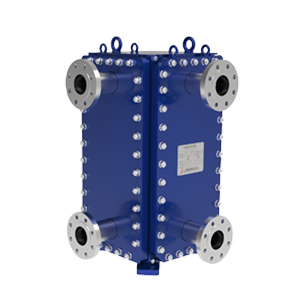
Unplanned downtime in petrochemical facilities often costs $45,000 per hour. Regular maintenance remains essential for maximizing equipment longevity and reducing operational costs. Industry data shows that traditional time-based maintenance leads to unnecessary interventions, while delayed responses increase downtime. Engineers benefit from understanding vibration phenomena and using smart monitoring systems for early detection. Shanghai Plate Heat Exchanger’s HT-Bloc Welded Plate Heat Exchanger offers innovative solutions for the Petrochemical heat exchanger sector, combining robust performance and easy maintenance. Actionable insights help professionals optimize reliability and efficiency.
Essential Heat Exchanger Maintenance Practices
Routine Inspection Checklist
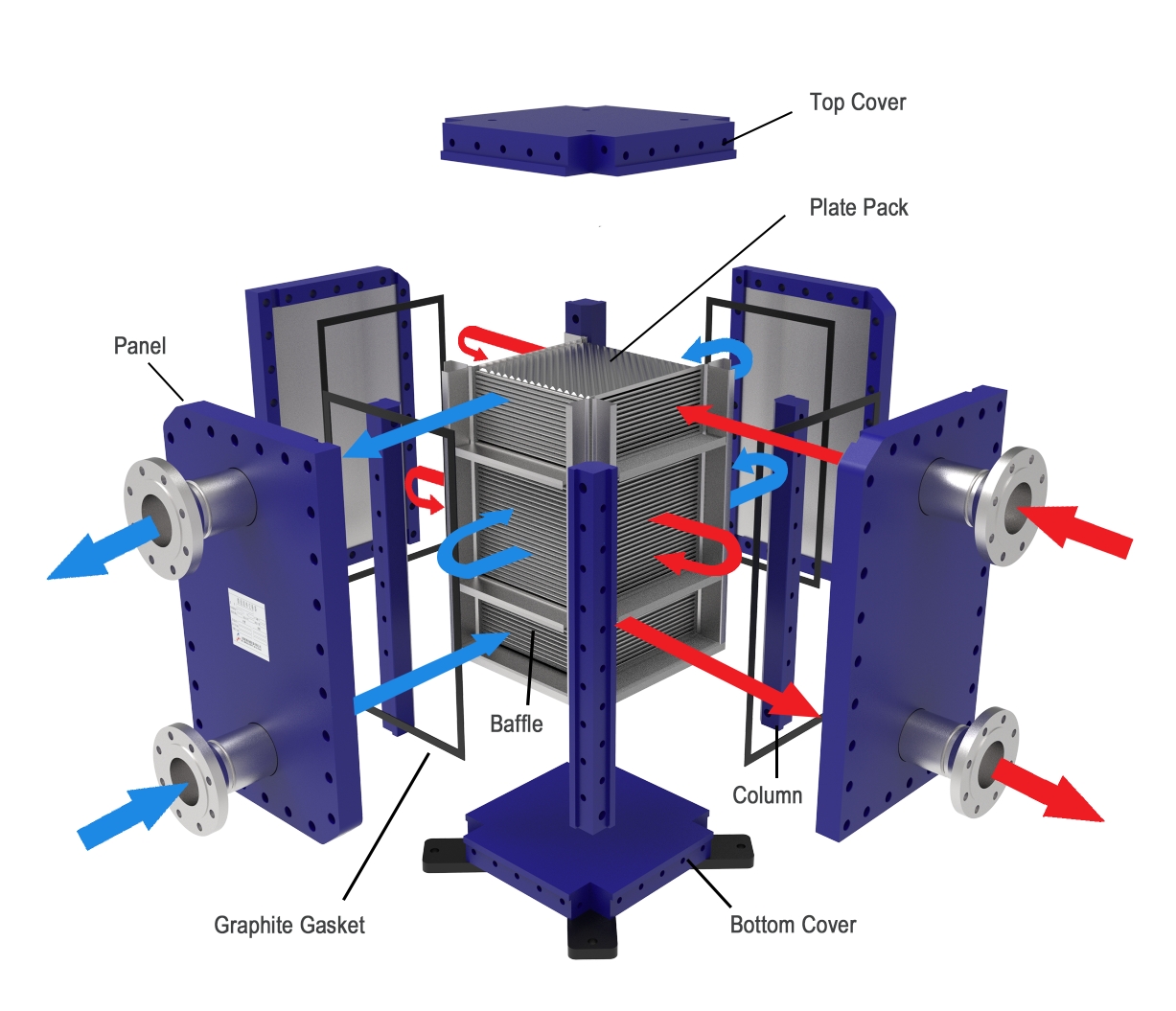
Routine inspection forms the foundation of effective heat exchanger maintenance. Industry standards recommend visual inspection of all accessible surfaces, checking for signs of fouling, corrosion, and erosion. Non-destructive testing methods, such as ultrasonic and eddy current inspections, help detect hidden issues before they escalate. The HT-Bloc Welded Plate Heat Exchanger from Shanghai Plate Heat Exchanger simplifies periodic inspection and servicing with its gasket-free construction and accessible channels. This design allows for quick assessment and reduces downtime during servicing.
Type of Heat Exchanger | Inspection Requirements |
|---|---|
Shell and Tube | Visual, Ultrasonic, Eddy Current, Hydrostatic, Borescope |
Plate Heat Exchanger (PHE) | Visual, Disassembly, Dye Penetration, Thickness, Leak |
Air Cooled Heat Exchanger | Visual, Cleaning Audit, Thermal Imaging, Vibration Analysis |
Double Pipe | Visual, Ultrasonic, Hydrostatic, Chemical Flushing |
Spiral | Visual, Ultrasonic, Pressure Drop, Thermal Performance |
Cleaning Methods and Frequency
Cleaning methods play a crucial role in maintaining efficiency. Mechanical cleaning removes deposits using brushes or hydro-jetting tools. Chemical cleaning dissolves fouling with specialized solutions. CIP systems enable closed-loop chemical cleaning with minimal intervention. The HT-Bloc’s accessible channels support both mechanical and chemical cleaning methods, making periodic maintenance easier. Cleaning frequency depends on usage intensity, water quality, and fluid contaminants. Most facilities schedule periodic maintenance every 3–6 months and clean annually or when efficiency drops by more than 10%. Regular cleaning prevents fouling and scaling, which can reduce heat transfer capabilities.
Tip: Schedule periodic maintenance based on operating conditions to optimize performance and extend equipment lifespan.
Monitoring Performance Metrics
Monitoring performance metrics is essential for proactive heat exchanger maintenance. Key metrics include heat transfer coefficient, heat transfer area, maximum skin temperature, and inlet hot fluid temperature. Software tools help identify fouling events and quantify cleaning value. Optimizing these metrics ensures operational reliability and reduces the risk of unexpected failures. The HT-Bloc Welded Plate Heat Exchanger supports advanced monitoring, helping engineers maintain peak efficiency and asset longevity. Periodic inspection and servicing, combined with data-driven analysis, deliver significant cost savings and productivity improvements.
Common Problems in Heat Exchangers and Solutions
Frequent Failures and Industry Stats
Petrochemical facilities face several common problems in heat exchangers. Industry statistics show that these issues often lead to costly downtime and safety risks. The most frequent failures include:
Fouling: This problem reduces heat transfer efficiency and increases pressure drop. It often results from contaminants in the feedstock.
Corrosion: Corrosion causes leaks and equipment failure. It can occur due to aggressive chemicals or moisture in the process fluids.
Leakage: Leaks may develop from corrosion, mechanical damage, or poor welding quality. They pose safety hazards and disrupt operations.
Thermal Stress: Rapid temperature changes can cause cracking and compromise the integrity of connections.
Mechanical Damage: Operational stresses sometimes lead to tube or plate failures.
Shanghai Plate Heat Exchanger’s HT-Bloc Welded Plate Heat Exchanger addresses these challenges with its corrosion-resistant materials and robust welded design. This product minimizes leakage risks and withstands harsh environments.
Root Causes and Warning Signs
Root causes of failures often relate to fouling, corrosion, and thermal expansion. Warning signs include:
Fouling buildup on heat transfer surfaces
Abnormal vibration levels
Tube perforations from corrosion or erosion
Tube-to-tubesheet joint failure
Cracked welds or gaskets
Corrosion-induced leakage is a major concern, especially when fluids contain corrosive substances. Excessive temperature differentials can also cause leaks at connection points. Regular maintenance and monitoring help detect these warning signs early.
Quick Fixes and Case Studies
Quick fixes for common problems in heat exchangers include:
Inspecting heat exchangers regularly to identify issues early
Resolving identified problems immediately to prevent performance losses
Adjusting operating conditions to stabilize production until maintenance can be performed
In a recent case, Shanghai Plate Heat Exchanger analyzed a tubular heat exchanger failure caused by corrosion and scaling. The team identified the root cause and recommended preventive measures, such as using corrosion-resistant materials and improving cleaning schedules. The HT-Bloc Welded Plate Heat Exchanger’s accessible channels and modular design make it easier to perform maintenance and address fouling quickly.
Tip: Choose heat exchangers with advanced design features, such as welded construction and corrosion-resistant materials, to reduce downtime and improve reliability.
Troubleshooting Petrochemical Heat Exchangers
Leak Detection Techniques
Detecting leaks in a petrochemical heat exchanger is critical for plant safety and operational efficiency. Modern facilities use a range of techniques to identify leaks early and minimize risks. The table below summarizes the key features of reliable leak detection methods:
Feature | Description |
|---|---|
Product Safety | Identifies plate conditions, reducing the risk of product safety incidents and loss. |
Equipment Uptime | Improves maintenance planning and avoids unexpected downtime, extending the life of the exchanger. |
Environmental Friendliness | Uses hydrogen testing, which lowers environmental impact compared to traditional methods. |
Compliance | Provides reliable documentation for audits and regulatory requirements. |
Advanced leak detection technologies, such as conductivity measurements, allow real-time monitoring of the petrochemical heat exchanger. By measuring the conductivity of condensate, operators can quickly spot contamination that signals a leak. Pure condensate has low conductivity, so any increase indicates possible leakage. This proactive approach helps prevent extensive damage and costly repairs.
Recent developments combine Kalman filters with physics-informed neural networks to process sensor data and detect leaks as small as 1% of flow. These systems operate in real time, providing rapid alerts and supporting continuous monitoring. Shanghai Plate Heat Exchanger recommends integrating these advanced systems with the HT-Bloc Welded Plate Heat Exchanger. The HT-Bloc’s welded design eliminates gaskets, reducing common leakage points and supporting safer, more reliable operation in petrochemical environments.
Tip: Schedule regular leak detection checks as part of your maintenance plan to ensure early identification and resolution of issues.
Fouling and Scaling Solutions
Fouling and scaling are persistent challenges in any petrochemical heat exchanger. These issues reduce heat transfer efficiency and can lead to unplanned shutdowns. The most common types of fouling include:
Scaling (Crystallization Fouling): Occurs when dissolved salts precipitate on heat transfer surfaces, forming hard deposits.
Particulate Fouling (Sedimentation): Results from the accumulation of solid particles, which insulate surfaces and increase pressure drop.
Biofouling: Caused by the growth of microorganisms, leading to biofilm formation and potential clogging.
Corrosion Fouling: Develops from chemical reactions that produce corrosion products, which can damage equipment and reduce efficiency.
Chemical Fouling: Involves deposits from fluid-surface reactions, blocking flow and impeding heat transfer.
Freezing Fouling: Happens when fluids freeze on surfaces, especially in low-temperature operations.
To address these problems, Shanghai Plate Heat Exchanger’s HT-Bloc Welded Plate Heat Exchanger offers several advantages. Its fully welded, gasket-free construction minimizes areas where fouling can accumulate. The modular design allows for easy disassembly and targeted cleaning, reducing downtime during maintenance. Mechanical cleaning, chemical flushing, and closed-loop CIP systems are all compatible with the HT-Bloc, making it a versatile solution for fouling control in petrochemical heat exchanger applications.
Note: Regular inspection and cleaning are essential to prevent fouling and maintain optimal performance.
Restoring Heat Transfer Efficiency
When a petrochemical heat exchanger experiences performance degradation, restoring heat transfer efficiency becomes a top priority. The following steps are proven to deliver results:
Remove Fouling: Conduct regular cleaning to eliminate deposits and restore direct contact between heat transfer surfaces and process fluids.
Preventative Fouling Measures: Install filtration systems and apply surface coatings to minimize future fouling build-up.
Furnace Repairs and Maintenance: Address mechanical issues promptly and perform scheduled maintenance to keep the system running smoothly.
Retrofit or Redesign: Upgrade or modify the heat exchanger system if persistent issues limit efficiency.
Welded and modular designs, such as those found in the HT-Bloc Welded Plate Heat Exchanger, simplify troubleshooting and efficiency restoration. The easy-to-open modules allow for rapid cleaning and inspection. The advanced plate geometry maximizes thermal performance, while the robust construction ensures long-term reliability. These features make the HT-Bloc an ideal choice for petrochemical heat exchanger operations that demand high efficiency and minimal downtime.
Callout: Choosing a petrochemical heat exchanger with modular and welded features can significantly reduce maintenance costs and improve operational reliability.
Shanghai Plate Heat Exchanger stands out as a preferred provider for troubleshooting and maintaining petrochemical heat exchangers. The HT-Bloc Welded Plate Heat Exchanger combines innovative design, advanced materials, and proven reliability, making it the top choice for engineers seeking efficient and sustainable solutions.
Proactive Strategies for Reliability
Predictive Maintenance Tools
Predictive maintenance tools have transformed reliability management for petrochemical heat exchangers. These tools use real-time data and advanced analytics to forecast equipment issues before they cause failures. Facilities that adopt predictive maintenance see significant benefits:
Unplanned downtime drops by 35–45%, which protects production schedules and reduces emergency repairs.
Maintenance costs decrease by 25–30% compared to traditional preventive approaches.
Many organizations achieve a return on investment of 10:1, with payback periods as short as three to nine months.
The HT-Bloc Welded Plate Heat Exchanger from Shanghai Plate Heat Exchanger supports predictive maintenance strategies. Its modular and durable design allows for easy inspection and targeted servicing. The welded construction reduces leak points, while advanced monitoring systems can be integrated for continuous performance tracking. These features help engineers address problems early and maintain high operational efficiency.
Tip: Predictive maintenance not only lowers costs but also extends the service life of critical assets.
Staff Training and Best Practices
Well-trained staff are essential for reliable heat exchanger operation. Comprehensive training programs ensure that teams understand inspection, cleaning, and maintenance protocols. Recommended courses include:
Course Title | Description | Key Highlights |
|---|---|---|
Heat Exchanger Inspection and Cleaning Techniques | Focuses on monitoring, inspection, and cleaning to maintain optimal performance. | - Identifies performance degradation indicators |
Refinery Plant Maintenance: Planning and Execution Best Practices | Covers work management in refinery maintenance, emphasizing safety and reliability. | - Defines reliability and safety challenges |
Heat Exchanger Inspection and Cleaning Techniques | Builds expertise in inspection and cleaning, crucial for efficient energy transfer. | - Explains fouling types and diagnostics |
Adherence to best practices also involves compliance with international standards. Certifications such as ASME, CE, ISO, and TEMA play a vital role in reliability assurance:
Certification | Contribution to Reliability and Safety |
|---|---|
ASME | Sets standards for design, fabrication, and testing. |
CE | Ensures compliance with safety requirements for pressure equipment. |
ISO | Provides industry-specific safety and performance standards. |
TEMA | Defines mechanical design aspects for reliability. |
Shanghai Plate Heat Exchanger’s HT-Bloc Welded Plate Heat Exchanger meets these certifications, offering peace of mind for engineers who demand quality and safety.
Industry statistics confirm several key maintenance and troubleshooting tricks for petrochemical heat exchangers:
Stay ahead of potential issues with routine inspections.
Apply optimal cleaning methods to extend equipment lifespan.
Analyze performance metrics for informed decisions.
Schedule inspections to detect wear, corrosion, or fouling.
Clean interior and exterior surfaces regularly.
Monitor operating conditions for sudden changes.
Shanghai Plate Heat Exchanger’s HT-Bloc Welded Plate Heat Exchanger delivers long-term reliability. Its fully welded plates, compact structure, and flexible flow configuration provide efficient heat transfer and easy maintenance.
Feature | Benefit |
|---|---|
Fully welded plates | Prevents crevice corrosion |
Disassemblable frame | Simplifies repair and cleaning |
High efficiency | Enhances thermal performance |
Tip: Choose innovative solutions like the HT-Bloc to maximize operational reliability and minimize downtime.
FAQ
What is the most common cause of heat exchanger failure in petrochemical plants?
Fouling and corrosion remain the leading causes. Regular inspection and cleaning help prevent these issues. The HT-Bloc Welded Plate Heat Exchanger from Shanghai Plate Heat Exchanger offers advanced materials that resist both problems.
How often should a petrochemical heat exchanger be cleaned?
Most facilities clean their heat exchangers every 3–6 months. Cleaning frequency depends on process conditions and fluid quality. The HT-Bloc’s accessible channels make scheduled maintenance faster and more efficient.
What are the benefits of a welded plate heat exchanger design?
Welded plate designs eliminate gaskets, reducing leak risks and maintenance needs. The HT-Bloc Welded Plate Heat Exchanger provides robust performance in high-pressure and high-temperature environments.
How can I detect leaks early in my heat exchanger system?
Use conductivity sensors or hydrogen testing for real-time leak detection. The HT-Bloc’s welded construction minimizes leak points, supporting safer operation and easier monitoring.
Why choose Shanghai Plate Heat Exchanger for petrochemical applications?
Shanghai Plate Heat Exchanger delivers certified, reliable solutions. The HT-Bloc Welded Plate Heat Exchanger combines efficiency, durability, and easy maintenance, making it ideal for demanding petrochemical environments.