
 English EN
 中国 CN
中国 CN
 French FR
 German DE
 Portuguese PT
 Spanish ES
 Russian RU
 Japanese JA
 Korean KO
 Arabic AR
 Turkish TR
 Italian IT
Industries Benefiting from Printed Circuit Heat Exchangers

Industrialization and energy-saving systems continue to boost the demand for advanced heat exchange solutions. Printed circuit heat exchangers serve as essential equipment in sectors such as oil & gas, power generation, and renewable energy. These exchangers operate efficiently in environments with high pressure and temperature. The printed circuit heat exchanger features a compact footprint, superior heat transfer efficiency, and outstanding durability. Shanghai Plate Heat Exchanger leads the market with innovative printed circuit heat exchanger designs, supporting a wide range of industries.
Oil & gas, power generation, and renewable energy projects use printed circuit heat exchangers for reliable heat management.
The printed circuit heat exchanger achieves up to 98% heat transfer efficiency, maximizing energy savings.
Printed Circuit Heat Exchanger Overview
Design and Technology
Printed circuit heat exchangers stand out due to their advanced design features. These exchangers use a microchannel structure, which increases the surface area available for heat transfer. The channels, etched into thin metal plates, allow fluids to flow rapidly and efficiently. This design leads to higher heat transfer rates and improved heat transfer capabilities. The compact size of printed circuit heat exchangers makes them ideal for industries where space is limited. Their all-welded construction ensures durability and leak-proof operation.
Shanghai Plate Heat Exchanger has introduced several innovations in printed circuit heat exchanger manufacturing. The company produces exchangers that can handle pressures up to 1000 bar and temperatures from -196°C to 850°C. The microchannel efficiency results from optimized flow distribution and turbulence, which boosts heat transfer capabilities. The all-welded, gasket-free construction uses diffusion bonding, creating a robust and maintenance-free product. Shanghai Plate Heat Exchanger offers versatile material selection, allowing the exchangers to suit different industrial needs.
Printed circuit heat exchangers are suitable for clean fluids only, which helps maintain their performance and reliability over time.
Key design features of printed circuit heat exchangers include:
Compact size
High surface area to size ratio
Unique fluid channel designs
High heat transfer coefficient
All-welded construction
Performance Metric | Improvement | Comparison Basis |
|---|---|---|
Convective Heat Transfer | Compared to conventional 2D CSP heat exchanger | |
Von-Mises Equivalent Stress | 20.0% reduction | Compared to conventional 2D CSP heat exchanger |
Key Advantages
Printed circuit heat exchangers offer several advantages over traditional exchangers. Their efficiency allows for effective heat transfer between fluids, which is valuable in many applications. The durability of these exchangers comes from the use of corrosion-resistant metals like stainless steel. Precision manufacturing, such as photochemical etching, creates microchannels with high accuracy, further enhancing higher heat transfer rates. The compact design reduces the space required for heat exchange, making these exchangers more practical for modern facilities.
Advantage | Description |
|---|---|
Efficiency | Facilitates efficient heat transfer between fluids in various applications. |
Durability | Uses metals known for corrosion resistance and long-term reliability. |
Precision in Manufacturing | Microchannels created with high accuracy for better heat transfer. |
Compact Design | Requires less space for heat exchange processes. |
Shanghai Plate Heat Exchanger continues to lead the industry by delivering printed circuit heat exchangers that combine advanced technology, reliability, and adaptability. These exchangers support higher heat transfer rates and provide consistent performance in demanding environments.
Use-Cases Across Industries
Printed circuit heat exchangers have transformed heat management in many industries. Their advanced design and reliable performance make them essential in a wide range of applications. This section explores the use-cases across industries, highlighting how these exchangers support operational efficiency, safety, and sustainability.
Oil & Gas
The oil and gas sector relies on printed circuit heat exchangers for critical heat transfer tasks. These exchangers operate in environments with high pressure and temperature, making them ideal for demanding applications. Common uses include:
Gas compression systems offshore
Hydrocarbon gas and water dew-pointing
End Flash Gas and BOG handling systems in LNG
Turbine fuel gas preheating
Supercritical carbon dioxide (sCO2) applications for power generation
Shanghai Plate Heat Exchanger provides solutions that meet the unique needs of the oil and gas industry. Their exchangers deliver reliable heat transfer, ensuring safe and efficient operations. In LNG processing, the channel geometry of printed circuit heat exchangers, such as trapezoidal channels, can increase the heat transfer coefficient by up to 53%. This improvement supports energy savings and enhances production output.
Channel Geometry | Heat Transfer Coefficient Increase |
|---|---|
Trapezoidal | Up to 53% |
Chemical Processing
Chemical processing plants demand precise thermal control and robust equipment. Printed circuit heat exchangers excel in these environments due to their compactness and efficiency. They are especially valuable in the petrochemical sector, where multiple temperature stages must be managed. Key applications include:
Space-constrained environments requiring high efficiency
Petrochemical processing with multiple temperature stages
Processes with extreme temperature and pressure conditions
These exchangers use durable materials like stainless steel and titanium, which resist corrosion, fouling, and scaling. Their design allows for easy disassembly and cleaning, reducing maintenance costs and preventing breakdowns. By maintaining optimal temperatures, printed circuit heat exchangers extend the lifespan of other components in chemical plants. Shanghai Plate Heat Exchanger customizes solutions for the petrochemical sector, ensuring reliable heat management and operational safety.
Power Generation
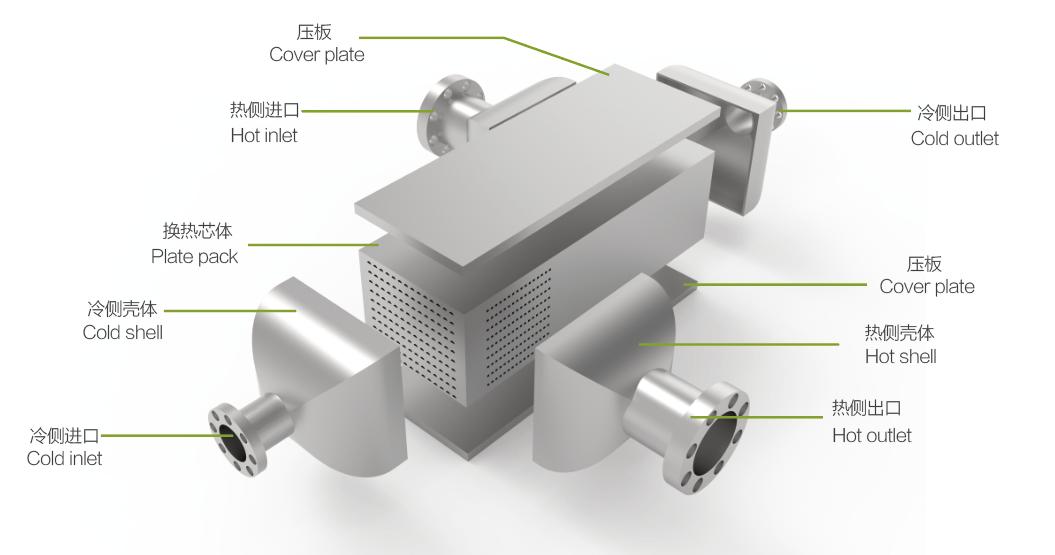
Power generation facilities benefit from printed circuit heat exchangers in several ways. These exchangers play a vital role in supercritical CO2 (sCO2) power cycles, where they manage extreme temperature and pressure conditions. Their compact and efficient design supports high thermal efficiency and lower emissions. Applications include:
Heat transfer in sCO2 systems
Heat recuperation for large-scale power generation
Cost-effective solutions for thermal management
Shanghai Plate Heat Exchanger offers exchangers that enable the use of sCO2 in power plants, helping operators achieve energy savings and environmental goals. Their technology supports reliable heat transfer, which is essential for modern power generation.
Renewable Energy
Renewable energy systems require advanced heat management to maximize efficiency. Printed circuit heat exchangers are widely used in hydrogen production and cooling, as well as other renewable energy applications. Their compact design and ability to withstand high pressures and temperatures make them suitable for these fields. Key attributes include:
Attribute | Description |
|---|---|
Safety | PCHEs help precool hydrogen to reduce temperature in tanks, enhancing safety during refueling. |
Cost Efficiency | They can contribute to savings in hydrogen costs and represent a significant portion of refueling station costs. |
Design and Performance | PCHEs are compact, efficient, and can withstand high pressures and temperatures, making them suitable for various applications. |
Manufacturing Process | PCHEs are made using photochemical etching and diffusion bonding, ensuring strong and reliable structures. |
Applications | Widely used in high-pressure and high-temperature fields, including hydrogen cooling and renewable energy systems. |
The use of non-uniform interrupted ribs in printed circuit heat exchangers leads to thermal performance enhancements ranging from 3.4% to 29.8%. Modified exchangers show a 78% improvement in the Nusselt number and a 150% increase in the friction factor. These improvements help renewable energy systems operate more efficiently and sustainably.
HVAC & Refrigeration
Modern HVAC and refrigeration systems integrate printed circuit heat exchangers to achieve high thermal performance. Their compact design allows for efficient use of space, which is important in buildings and industrial facilities. Applications include:
Air conditioning units
Chillers
Heat pumps
Printed circuit heat exchangers enhance the efficiency of these systems, supporting sustainable building practices. Advanced manufacturing techniques, such as diffusion bonding and precision etching, ensure reliable operation under extreme conditions. Shanghai Plate Heat Exchanger delivers solutions that meet the needs of the HVAC and refrigeration industry, providing consistent heat transfer and energy savings.
Aerospace & Defense
The aerospace and defense industries require compact, high-performance heat transfer equipment. Printed circuit heat exchangers support applications such as:
Cooling electronics, engine oil, and hydraulic oil in military aircraft
High heat flux removal in microchannel heat exchangers
These exchangers improve the strength-to-weight ratios of aerospace components, which is essential for maintaining structural integrity and thermal performance. Lightweight materials like aluminum make printed circuit heat exchangers ideal for aerospace applications, where weight reduction is critical. The adoption of these exchangers supports fuel-efficient and environmentally friendly aircraft by enhancing thermal management and reducing fuel consumption.
Shanghai Plate Heat Exchanger adapts its products for aerospace and defense, ensuring reliable heat transfer and durability in challenging environments.
Printed circuit heat exchangers continue to drive innovation in heat management, supporting a wide range of applications across industries. Their adaptability and performance make them a preferred choice for operators seeking efficiency and reliability.
Efficiency and Sustainability Benefits
Energy Savings
Industries that adopt printed circuit heat exchangers experience significant improvements in energy efficiency. These systems use advanced microchannel designs to maximize heat transfer, which reduces the amount of energy needed for thermal management. Many facilities report average energy savings between 20% and 30% after switching to this technology. The compact structure allows for better heat recovery, which further lowers energy consumption. Operators see reduced operational costs and improved production output. The ability to maintain optimal temperatures with less energy input supports sustainable practices across sectors.
Average energy savings range from 20% to 30% after implementation.
Enhanced heat recovery leads to lower energy consumption.
Facilities achieve better thermal management with less energy waste.
Environmental Impact
Printed circuit heat exchangers contribute to a cleaner environment by reducing greenhouse gas emissions. Their efficient heat transfer capabilities allow for greater heat recovery, which means less fuel is burned during industrial processes. This reduction in fuel use directly lowers emissions per unit of output. The use of innovative materials also decreases lifecycle energy consumption compared to traditional heat exchangers. The following table highlights key differences:
Aspect | Printed Circuit Heat Exchangers | Traditional Heat Exchangers |
|---|---|---|
Material Energy Consumption | Lower due to innovative materials | Higher due to copper/aluminum |
Operational Efficiency | Higher efficiency reduces energy use | Lower efficiency increases energy use |
Lifecycle Emissions | Reduced emissions over lifespan | Higher emissions due to material and operational inefficiencies |
Reduced greenhouse gas emissions support sustainability goals.
Reliability and Safety
Printed circuit heat exchangers offer reliable performance in high-pressure and high-temperature environments. Their robust construction and advanced design features ensure safe operation, even in demanding applications. The exchangers are up to 85% smaller and lighter than traditional shell-and-tube models, which makes them easier to install and maintain. High thermal efficiency results from numerous minuscule channels, providing a large heat exchange area per unit volume. These systems are ideal for high-temperature reactors and hydrogen refueling stations, where safety is critical.
Feature | Description |
|---|---|
Size | Up to 85% smaller and lighter than shell-and-tube competitors |
Heat Transfer Rate | Higher rate of heat transfer due to unique design |
Performance | Improved performance while operating at lower costs |
Customization | Can be customized for specific operational needs |
Application | Ideal for high-pressure duties, including hydrogen refuelling processes |
High thermal efficiency supports safe and reliable thermal management.
Suitable for high-temperature reactors as intermediate heat exchangers.
Printed circuit heat exchangers help industries achieve energy savings, reduce environmental impact, and maintain reliable thermal management in challenging conditions.
Technological Advancements
Customization and Versatility
Printed circuit heat exchangers have evolved through significant technological advancements. Manufacturers now use chemically etched microchannels to achieve high heat transfer coefficients and reduce pressure drops. Engineers refine internal geometries, introducing novel rib structures and two-way corrugated channels. These features enhance turbulence and improve heat transfer efficiency. Innovative channel geometries and fin configurations optimize flow uniformity and strengthen structural integrity.
Customization plays a vital role in the versatility of printed circuit heat exchangers. Designers tailor each unit to meet specific operational needs. They adjust channel patterns to manage extreme temperatures and pressures. Engineers optimize fluid flow paths for maximum heat transfer. Material selection ensures compatibility with corrosive substances. This adaptability allows printed circuit heat exchangers to deliver efficient heat management in sectors such as power generation and chemical processing.
Customization enables printed circuit heat exchangers to perform reliably in diverse environments, supporting both safety and efficiency.
A recent breakthrough involves the development of low-cost forming and net-shape reactive conversion processes for cermet materials. Manufacturers can now create complex shapes using high-strength materials like zirconium carbide and tungsten. These advancements expand the possibilities for printed circuit heat exchanger design and application.
Future Trends
The printed circuit heat exchanger market continues to grow as industries seek advanced heat management solutions. Several trends shape the future of this technology:
Increased demand for printed circuit heat exchangers due to ongoing technological advancements.
Expansion into new sectors, including automotive and IT, where efficient heat management is critical.
Rising focus on energy efficiency and improved heat transfer in electronic devices.
Anticipated compound annual growth rate (CAGR) of 5.8% from 2025 to 2035, driven by industrial applications and the shift toward energy-efficient systems.
Shanghai Plate Heat Exchanger remains at the forefront of these trends, investing in research and development to deliver innovative heat exchange solutions. The company adapts to changing market needs, ensuring that printed circuit heat exchangers continue to support sustainable industrial growth.
The future of printed circuit heat exchangers promises greater efficiency, broader applications, and ongoing innovation in heat management.
Printed circuit heat exchangers continue to reshape industrial thermal management. Their compact footprint, high efficiency, and durability support energy-intensive sectors in meeting emissions targets and regulatory standards. Shanghai Plate Heat Exchanger delivers advanced solutions that maximize heat transfer and operational resilience. Industry experts highlight ongoing technological breakthroughs and expanding market penetration.
Companies seeking reliable heat exchange systems can trust Shanghai Plate Heat Exchanger for tailored solutions.
Key Insight | Description |
|---|---|
Technological Breakthroughs | Advancements are reshaping thermal management strategies. |
Regulatory Compliance | Adoption helps industries meet stringent emissions targets. |
Market Penetration | Technology now serves commercial and industrial markets. |
FAQ
What makes printed circuit heat exchangers different from traditional models?
Printed circuit heat exchangers use microchannel technology. This design increases heat transfer efficiency and reduces size. Traditional models often use larger tubes and require more space.
Which industries benefit most from printed circuit heat exchangers?
Industries such as oil and gas, chemical processing, power generation, renewable energy, HVAC, and aerospace benefit most. These sectors need reliable, compact, and efficient heat exchange solutions.
How does Shanghai Plate Heat Exchanger customize solutions for clients?
Shanghai Plate Heat Exchanger tailors channel patterns, material selection, and unit size to meet specific operational needs. Engineers optimize each exchanger for pressure, temperature, and fluid compatibility.
Are printed circuit heat exchangers safe for high-pressure applications?
Printed circuit heat exchangers feature robust, diffusion-bonded construction. This design ensures leak-proof integrity and reliable performance in high-pressure and high-temperature environments.
What maintenance do printed circuit heat exchangers require?
Printed circuit heat exchangers need minimal maintenance. Their all-welded structure prevents leaks. Operators should monitor fluid cleanliness and inspect units periodically for optimal performance.